

Kay Musical Instruments was founded in 1931 in Chicago. They were a huge guitar company through the 1950’s and 60’s, producing up to 100,000 instruments annually at their peak. Legendary blues guitarists like Howlin’ Wolf, Jimmy Reed and Hubert Sumlin famously played Kay guitars. Unfortunately by the mid 60’s the company was facing intense pressure from cheaper Japanese imports. In 1965 Kay was acquired by jukebox manufacturer Seeburg who then sold them to Valco just two years later in 1967. The newly merged Valco/Kay company then went bankrupt and was dissolved shortly after in 1969.
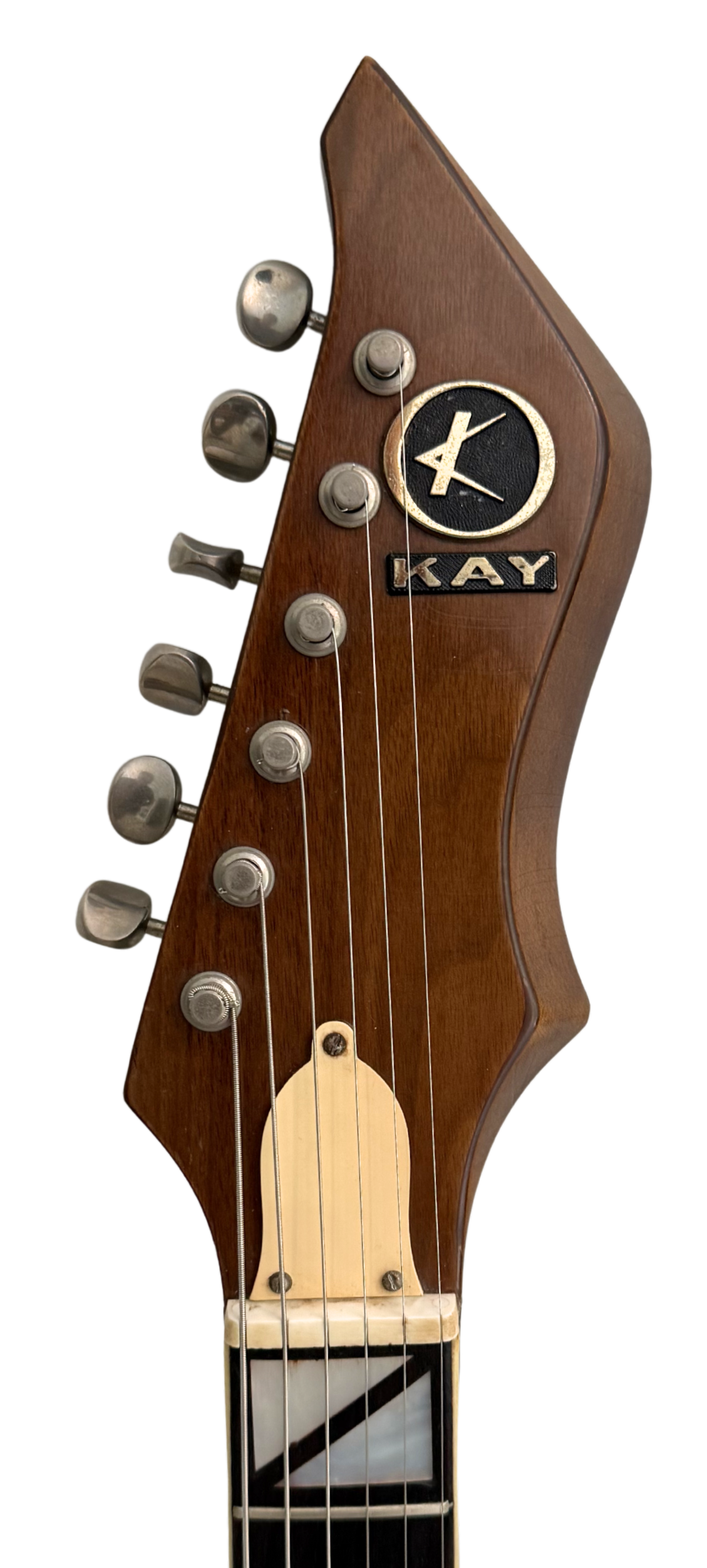
Most of the guitars that Kay made were affordable, sold through catalogs and department stores and were geared towards beginners and hobbiests, but they did also produced some high end professional models. From 1957 - 1960 Kay made a line of guitars called their Gold Line. The Gold Line guitars were heavily associated with Jazz legend Barney Kessel. They featured premium tone woods, electronics and quality craftsmanship. They had art deco styling with ornate appointments. A number of the Gold Line models featured a decorative plastic covering on the headstock that was referred to as the “Kelvinator headstock” because it resembled the Kelvinator refrigerator logo from the 50’s.
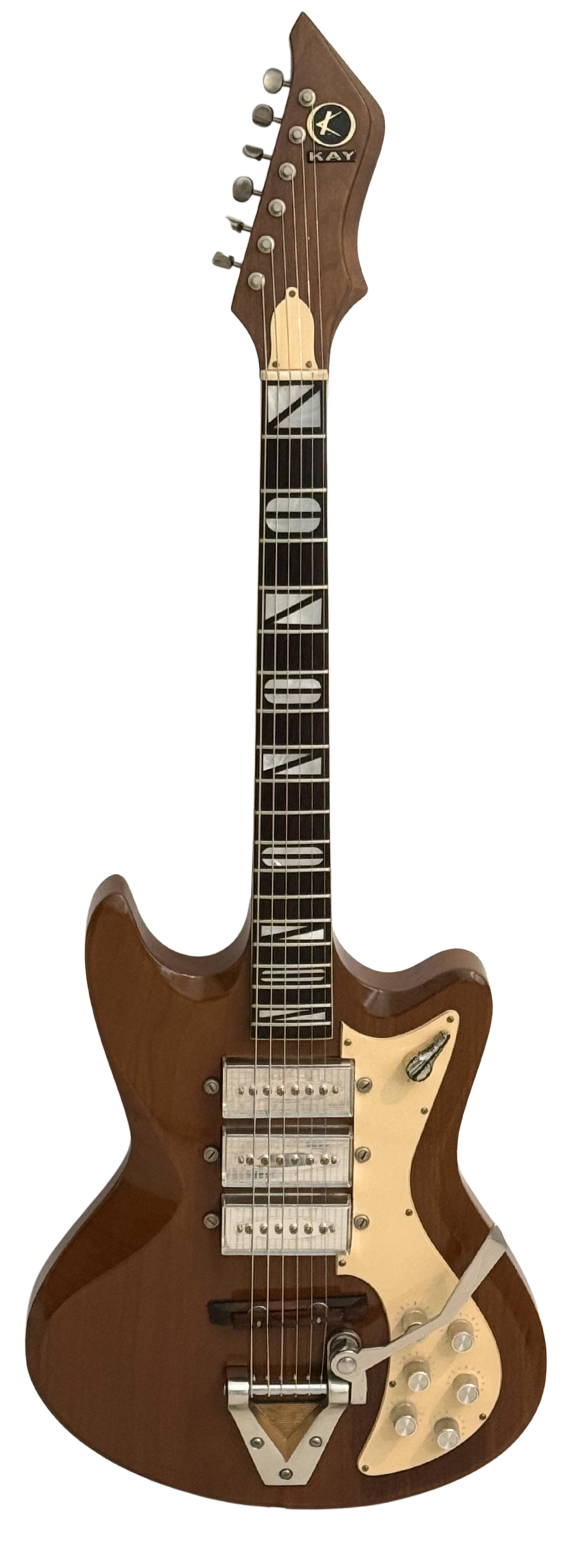
At the time that Kay was acquired by Seeburg in 1965, they were trying to upgrade their image to a hipper one. The guitar featured in this post was part of that effort.
The Titan was first introduced in 1965. Kay electric guitar models of the 60’s were known for being kind of bland looking and a few were just plain ugly. The Titans were going to change that image for Kay with their new mid-century styling and design. The Titan is a unique electric guitar that was made with high quality materials and decent craftsmanship, similar to the Gold Line series of the 50’s. Titans were only made for four years, 1965-1968. Other names like Apollo II and Catalina were used for these models with slight variations. There was a two pickup model, with or without tremolo, others had different pickguard styles and different pickups.
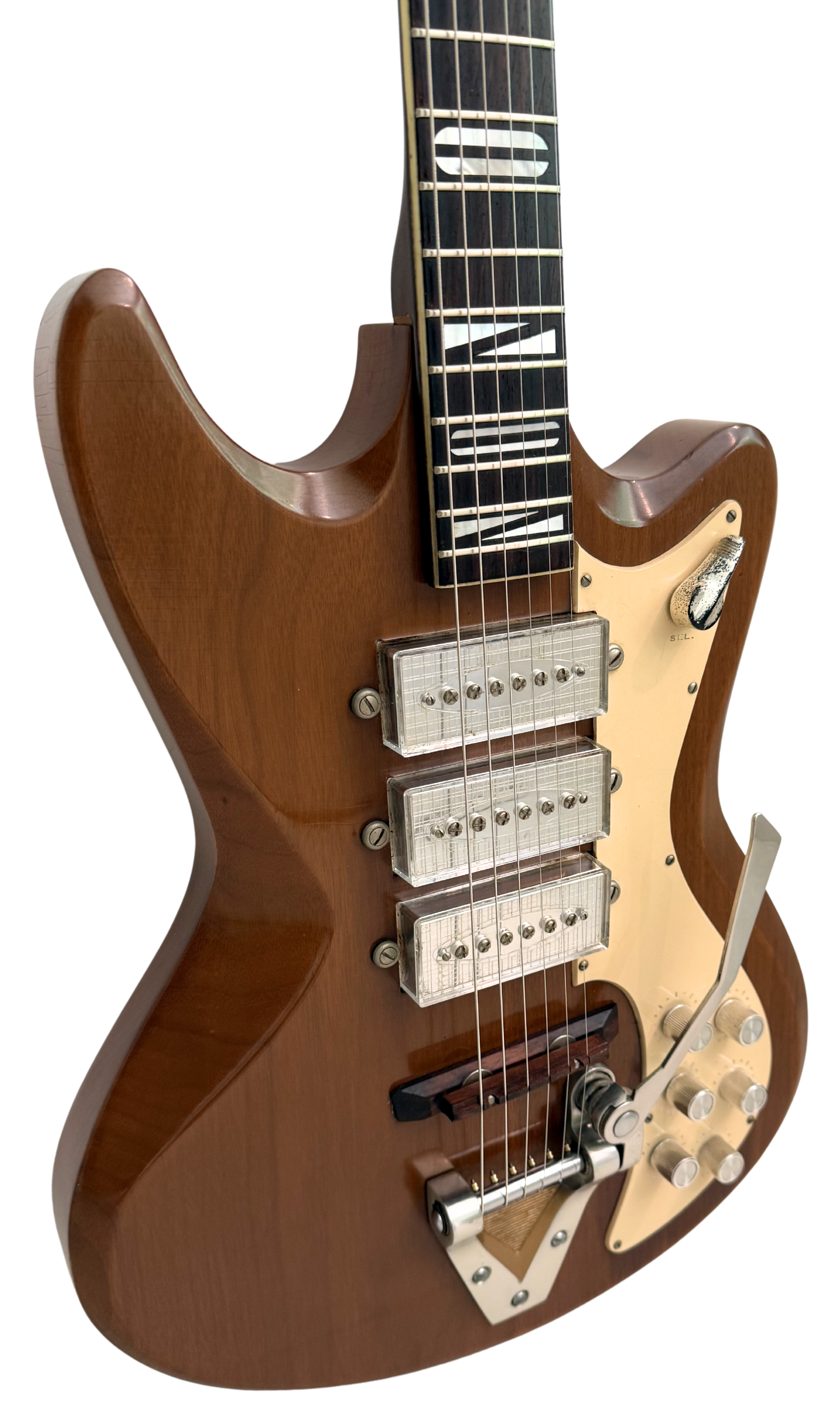
This particular version is the deluxe, top of the line Titan featuring 3 single coil, “Kleenex box” pickups and a bigsby style tremolo. It has a double cutaway, carved mahogany body that’s just under 2” thick. The body is chambered with hollow pockets throughout, making it light weight. The Titan came with a bolt-on mahogany neck and a 25.75” scale length. The neck has a medium thickness, V shape profile and a 1 5/8” wide nut. The fretboard included 19 medium sized frets and is made of Brazilian rosewood with split block and circle inlays up the neck. The adjustable, floating bridge is made of rosewood and it has a bigsby style tremolo.
The 3 single coil pickups are awesome. They got their nickname, “Kleenex box” from their clear, decorative plastic covers that closely resembled tissue boxes used in the 50’s. Kleenex box pickups were first featured on the Barney Kessel models. Kay continued to use them on a limited basis through the late 60’s on higher end guitars. They are similar to a P-90 with humbucker sized covers and large pole pieces. The neck pickup is warm and jazzy. Bridge pickup is clear and bright and the middle is a great balance of neck and bridge. Output is strong at 8K - 9K ohms. They have more clean headroom than a P-90 and are excellent for hollow body jazz guitars. It has a 4 way, rotary switch that lets you select each individual pickup and a fourth option to engage all 3 pickups. One volume and one tone knob for each pickup.
I love this guitar, but I also think it’s pretty weird looking. It reminds me of a cooktop range or some other appliance that my grandmother had in her house. Even the wood finish looks the same as the one used on her old hi-fi stereo console. One of the strangest things on the Titan is that the output jack is located on the back of the guitar.
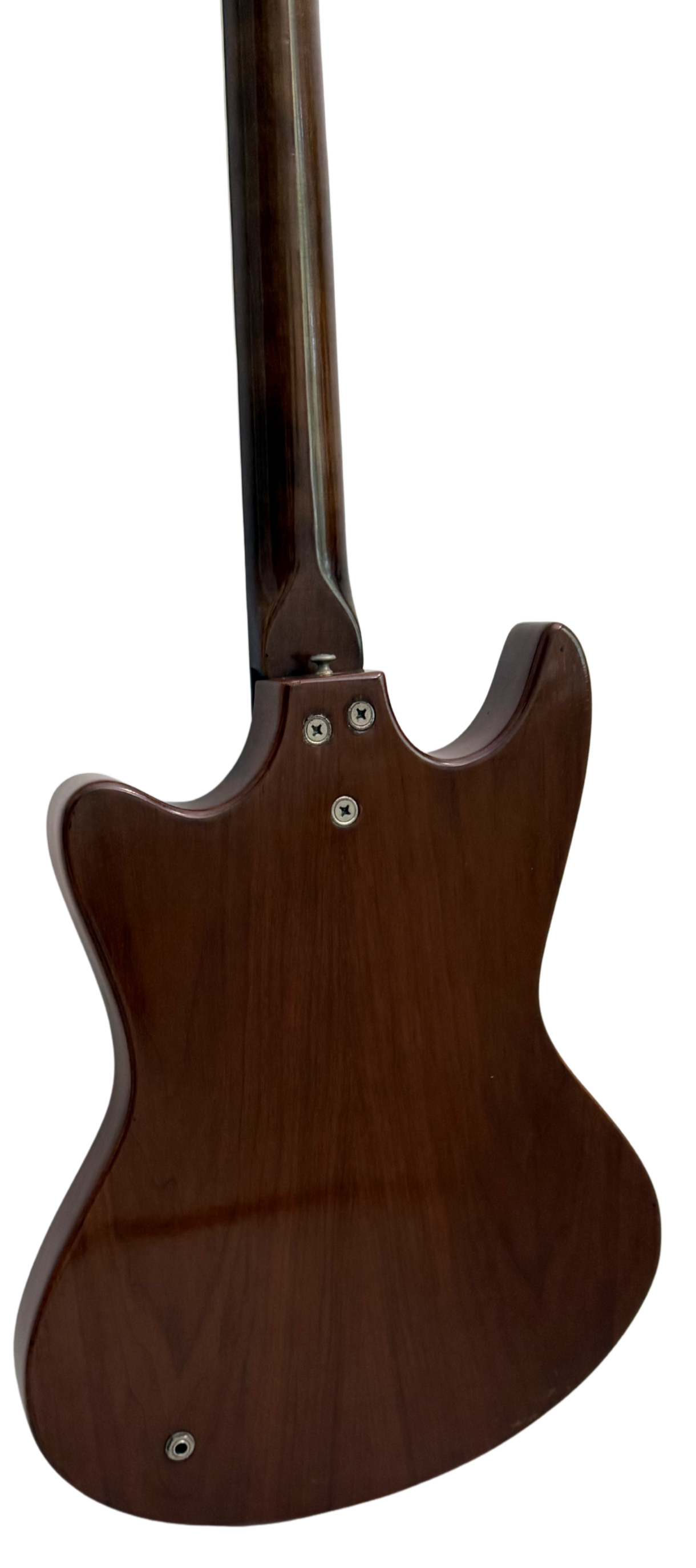
That said, it is a very good playing instrument. It’s chambered body makes it acoustically loud for an electric. The full feeling V shaped neck is comfortable and the fretboard and frets feel smooth. The action is low and intonation is great after 61 years. Plugged in, the guitar has a warm and punchy vintage tone. The 3 pickups and individual controls give you a full range of tones. It’s a shame that Valco/Kay weren’t able to fight off the competition and keep their business afloat. Guitars like this Titan were a pretty decent value for their time. It’s always nice to see survivors like this one still out there.