

National Stringed Instruments was an American guitar company formed in 1927. They made banjos, mandolins, ukuleles and guitars. Their biggest contribution to music was by far the creation of the resonator guitar. Resonator guitars, often called Dobros are acoustic guitars that make sound by conducting string vibrations through the bridge to one or more spun metal cones (resonators), instead of to the guitar’s top like a traditional acoustic. National came up with the resonator concept to provide more volume and more projection than traditional acoustics guitars which were getting overwhelmed by horns and percussion instruments in dance orchestras in the 20’s and 30’s. Resonators eventually became very popular with blues and bluegrass musicians.
National evolved into the National Dobro Company and in 1940 three of the former owners of National, Victor Smith, Al Frost, and Louis Dopyera broke off and formed another guitar and amplifier company based in Chicago called Valco. The name came from a combination of the three partner’s first initials (V.A.L.) plus the abbreviation for company (Co.)
Valco made tube amplifiers, resonators, lap steel, classical guitars and in the late 1950’s started making electric guitars under a number of different brand names like Airline, Supro, National and Oahu. Valco also made amplifiers for Gretsch, Harmony and Kay. The large department store chains in those days would purchase electric guitars and amps directly from Valco and sell them under their house brand names. Sears sold them as Silvertone. Montgomery Wards branded the guitars Airline. The very early Valco electrics were made out of the common tone woods available in the 50’s like Maple, Mahogany and Rosewood.
By the early 60’s the world was looking towards the future. Space age, mid-century modern aesthetic was the latest craze. Valco, like many companies wanted to explore making products that reflected the time and projected futuristic concepts.
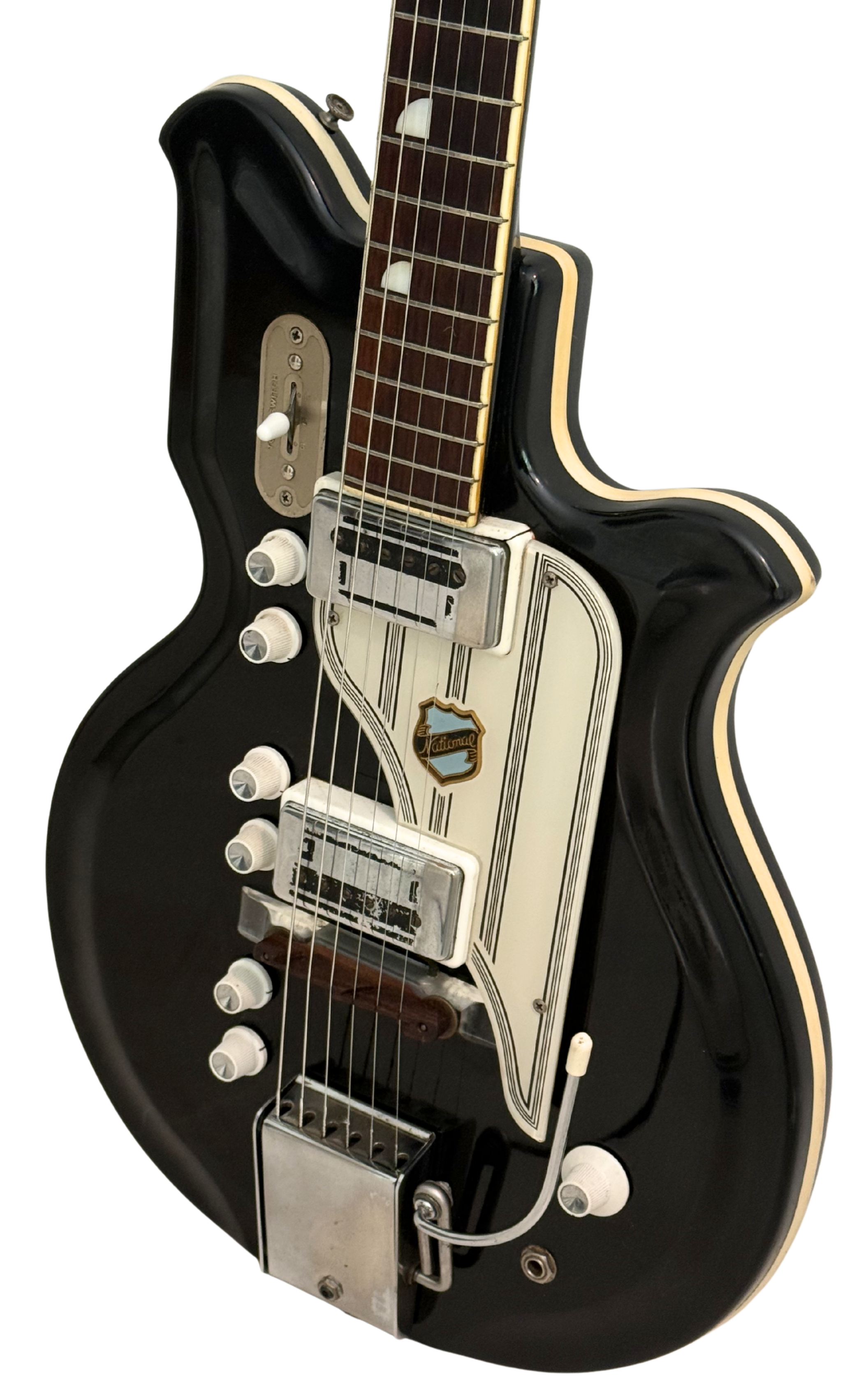
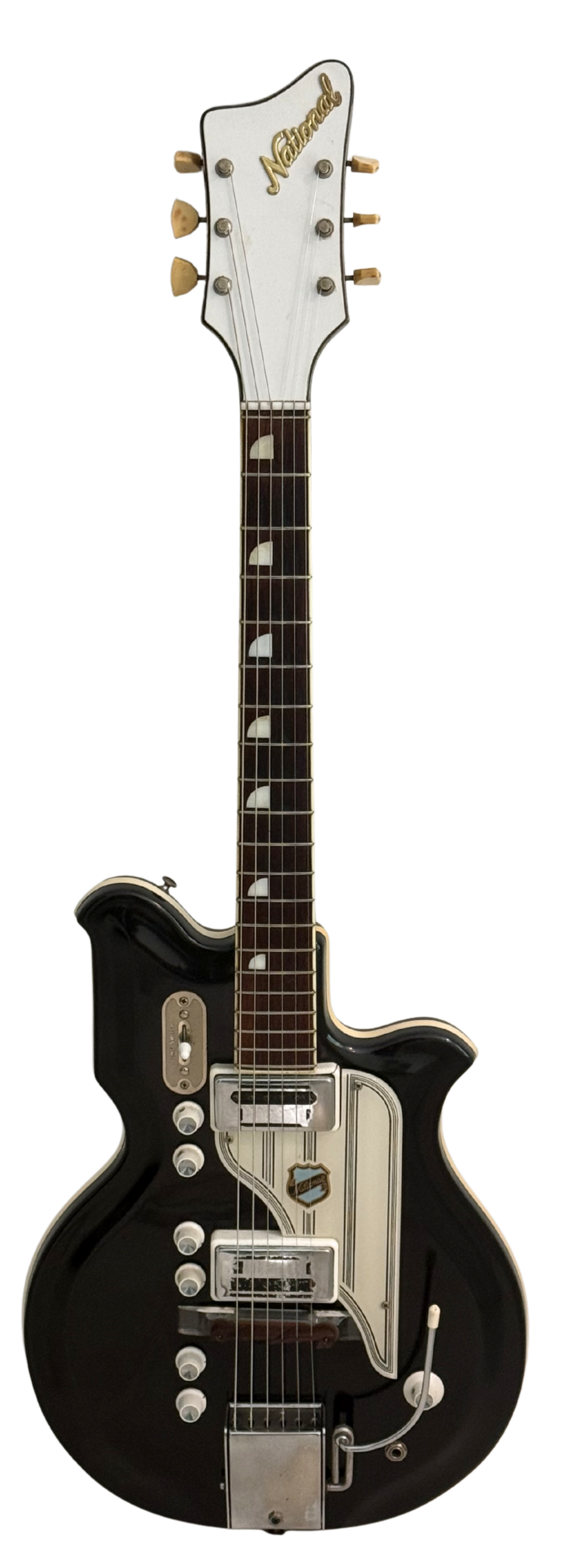
The guitar featured here is Valco’s attempt at their own futuristic design under the National name. It’s a 1964 National Newport 88 Val-Pro. “Val-pro” stands for “Valco Professional”.
There’s an iconic scene in the movie The Graduate when a family friend pulls Dustin Hoffman’s character aside at his college graduation party and says “ One word Benjamin…Plastics!? “. Plastic was a revolutionary material in the 60’s. Companies were using it to create and reinvent a number of consumer products. In 1953 Chevrolet saw huge success with the Corvette. A car that rocked the automotive world by using molded fiberglass to make a lightweight automobile body with sporty curves. Guitar designs had in many ways mirrored the auto industry in the old days and the folks at Valco thought, hey if it worked for Chevy maybe we can create a line of electric guitars made of molded fiberglass just like the Corvette.
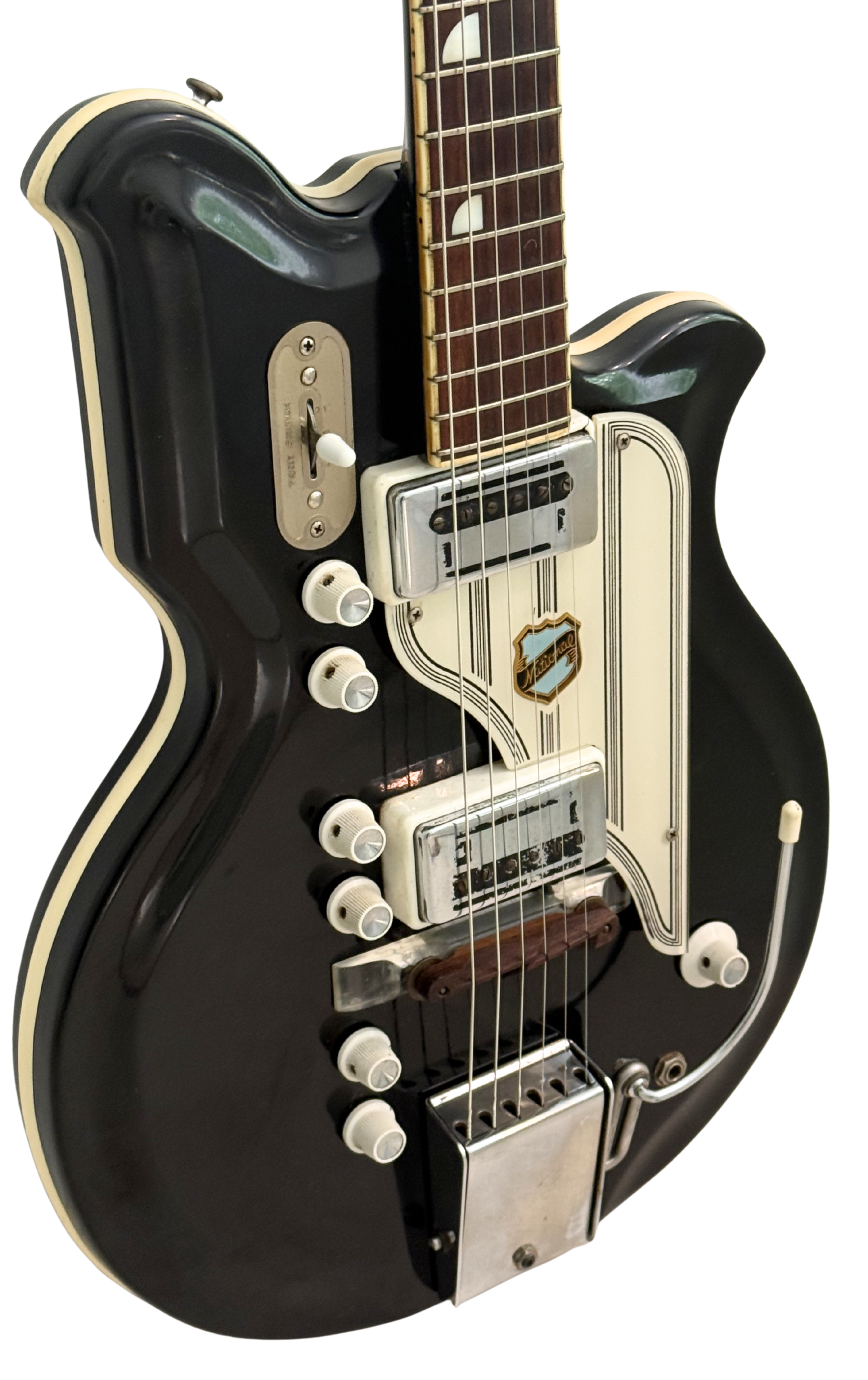
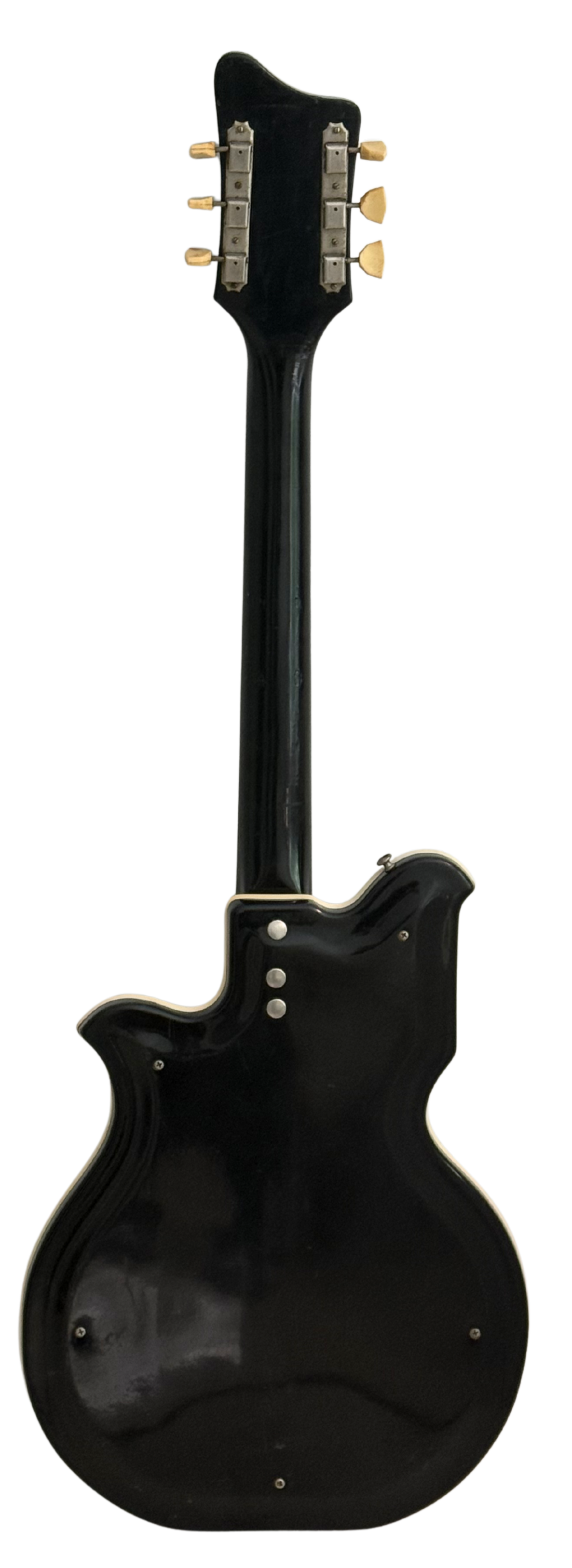
Valco went to work on their new line and came up with their patented Res-o-glass design. The body of the guitar has a wooden frame on the inside. Two pieces of molded fiberglass with a shape resembling a map of the U.S. were used as the front and back of the body. A rubber strip of trim wraps around the guitar seam where the two body pieces were joined. The guitar body is technically hollow. The neck is a traditional electric guitar neck, made of mahogany and screwed onto the body with 3 bolts that are covered by flat metal caps.
These guitars sound excellent and play well. A number of famous guitarists have discovered Valco made Res-o-glass guitars and used them in their arsenal to deliver awesome tone. Dan Auerbach of the Black Keys has been known to play a black Newport exactly like this one. Jack White of the White Stripes is famous for his red Airline (Montgomery Ward) Res-o-glass electric guitar which is very similar to this National.
Jack bought his guitar off one of the members of The Oblivions in the 90’s. He was quoted in an interview saying that he was drawn to the guitar because of its color and the fact that it felt like a cheap plastic toy. He’s often said that it’s a struggle to play the guitar and you really have to fight with it to land a clear note. The struggle brings out the magic and blues is about the struggle. He felt that it would have been too easy to play a Les Paul or Stratocaster. I think Jack has some good points and I don’t disagree with his POV except on one point. I wouldn’t describe these as cheap toy guitars. They were affordable and sold through department stores, but they were designed to be professional grade instruments. They are a little more challenging to play than say a new Stratocaster.. they can have a tendency to go out of tune pretty often, but with a good setup they play well. The sound that they put out is unreal. The White Stripes won 6 grammies in the time they were together and the amazing, raw, primitive guitar sound that Jack was able to get out of his Res-o-glass guitar was a big part of their success.
Chicago blues legend J.B. Hutto also played a version of the red Airline Res-o-glass guitar in the 70’s.
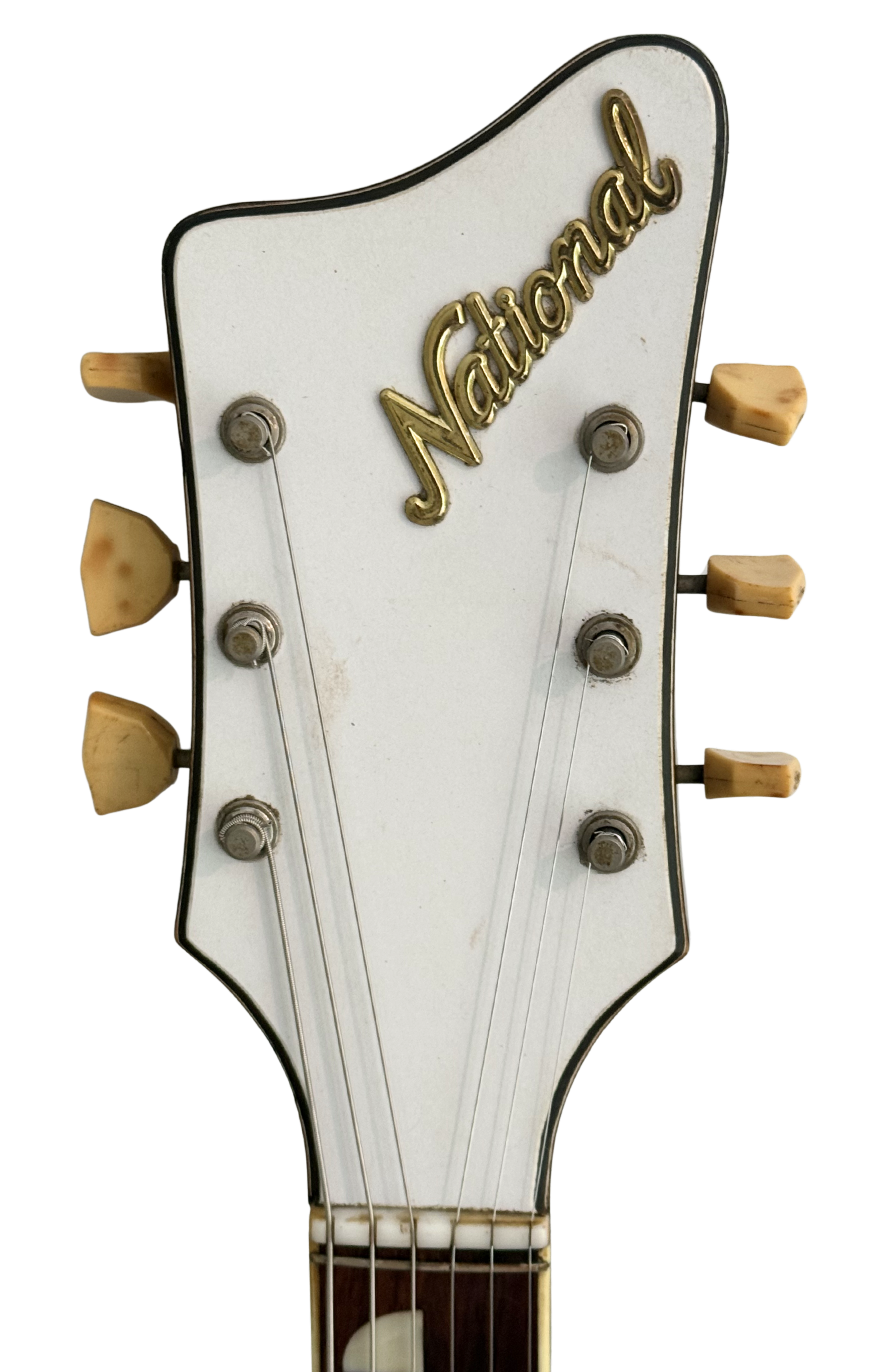
Airline branded versions were the more basic level Res-o-glass guitars. Supro was considered mid-level and these National branded ones were the Cadillacs of the line. National Res-o-glass guitars like this Newport 88 had special appointments. Neck binding and mother or pearl inlays on the fretboard. Highly decorative pick guards, a plastic logo on the headstock and art deco designs silk screened onto the pickup covers. The Newport 88 has 3 pickups with the Val-Trol electronics circuit. Two of the pickups are magnetic. They sit in the traditional neck and bridge positions, but they are far from typical. From the outside they look like humbuckers with nickel covers, but what’s going on inside is something more special. They are actually single coils and have a unique, design that was patented by Ralph Keller for Valco. Valco called them the Vista Tone pickups. The tone is warm with an early break up that happens before the signal even hits an amp. Vista Tones are in my mind, THE BEST sounding pickups for blues and garage rock. Nothing compares and while a few boutique modern day pickup makers have tried to recreate the tone, they just haven’t been able to get close to the vintage ones. The 3rd pickup is actually a piezo pickup which is built into the acrylic bridge base. These early piezo pickups are transducers and were design to sound like an acoustic guitar to add versatility to the guitar. Valco called the piezo their Silversun pickup. It really doesn’t sound like an acoustic.. It sounds more like you’re playing through an old Radio Shack transistor radio. Weird, but it does its thing and can be usable. With the incredible tone you get from the Vista Tone’s, you almost never end up using the piezo. There is a 3 way pickup selector up top and a dedicated volume and tone control for each of the 3 pickups. A master volume control near the jack. It has a very basic tremolo unit that acts more like a vibrato. Good for a couple of shakes, but doesn’t help much with tuning stability. The headstock has 3 white plastic tuners per side that are shaped like tulips. The neck has an 11/16” wide nut and a fairly slim, D shape with a nice Brazilian rosewood fingerboard.
To help drive home the point that these were intended to be professional grade, high end guitars I’ve included a video of Jazz great, Floyd Smith making his National Glenwood Res-o-glass guitar sing. The Glenwood was map shaped like the Newport, but had an additional cut out at the bottom of the body. It came in seafoam green, had gold hardware and a gold bigsby tremolo.
Joe Bonamassa once said that he doesn’t buy guitars, he buys stories. Well this Newport came with 62 years of stories. It’s seen a lot of bar time. Nicotine stains throughout. It has a couple of dents in the back of the neck which usually means one of the previous owners wore rings when playing. It’s all original except for the nut and switch tip. Surprisingly the neck is dead straight and original frets have held up well. This National comes with all of the soul and mojo of an old bluesman. It’s well put together, worn in and has a raspy, yet sweet velvety voice. So cool!