

PRS Guitars is an American guitar and amplifier manufacturer founded by Paul Reed Smith in 1985 in Annapolis Maryland. Smith was inspired to build his own electric guitar designs at an early age. He made his first bass in 1972 while in high school. He then went on to college and built his first electric guitar at 19. Smith dropped out of college shortly after to open his own repair and luthier shop in Annapolis.
In 1976, he built a custom guitar for Peter Frampton that he took to some of his concerts. Smith would knock on backstage doors to try and show it to Frampton and was eventually let in. He did the same with other artists. Ted Nugent bought an early guitar from Smith. Al Di Meola ordered a 12-string model from him. Howard Leese from the band Heart bought Smith’s first maple-topped guitar, called the Golden Eagle.
Carlos Santana asked Smith to make a guitar for him similar to Leese’s which he delivered in 1980. The story goes that Santana said that the first guitar was an accident of God it was so good. He said to Smith, I bet you can’t make 5 more like this. By the fifth one Santana said “ok you’re a guitar maker” and he became one of the first early endorsers of PRS guitars. In 1984, Smith had refined his initial designs, creating his brand’s upcoming signature design elements, including its Strat-meets-Les Paul body shape, headstock design, unique fretboard inlays, and dual humbuckers with rotary, five-way pickup switching. Smith debuted his new guitar model, the “Custom,” at the 1985 NAMM Show, and afterwards traveled to retailers along the East Coast, collecting enough preorders to open his own Annapolis factory that same year.
Fast forward to today, PRS is one of the most successful guitar brands in the world with signature models and endorsements from guitarists like Carlos Santana, Mark Tremonti, John Mayer, John Mclaughlin and David Grissom.
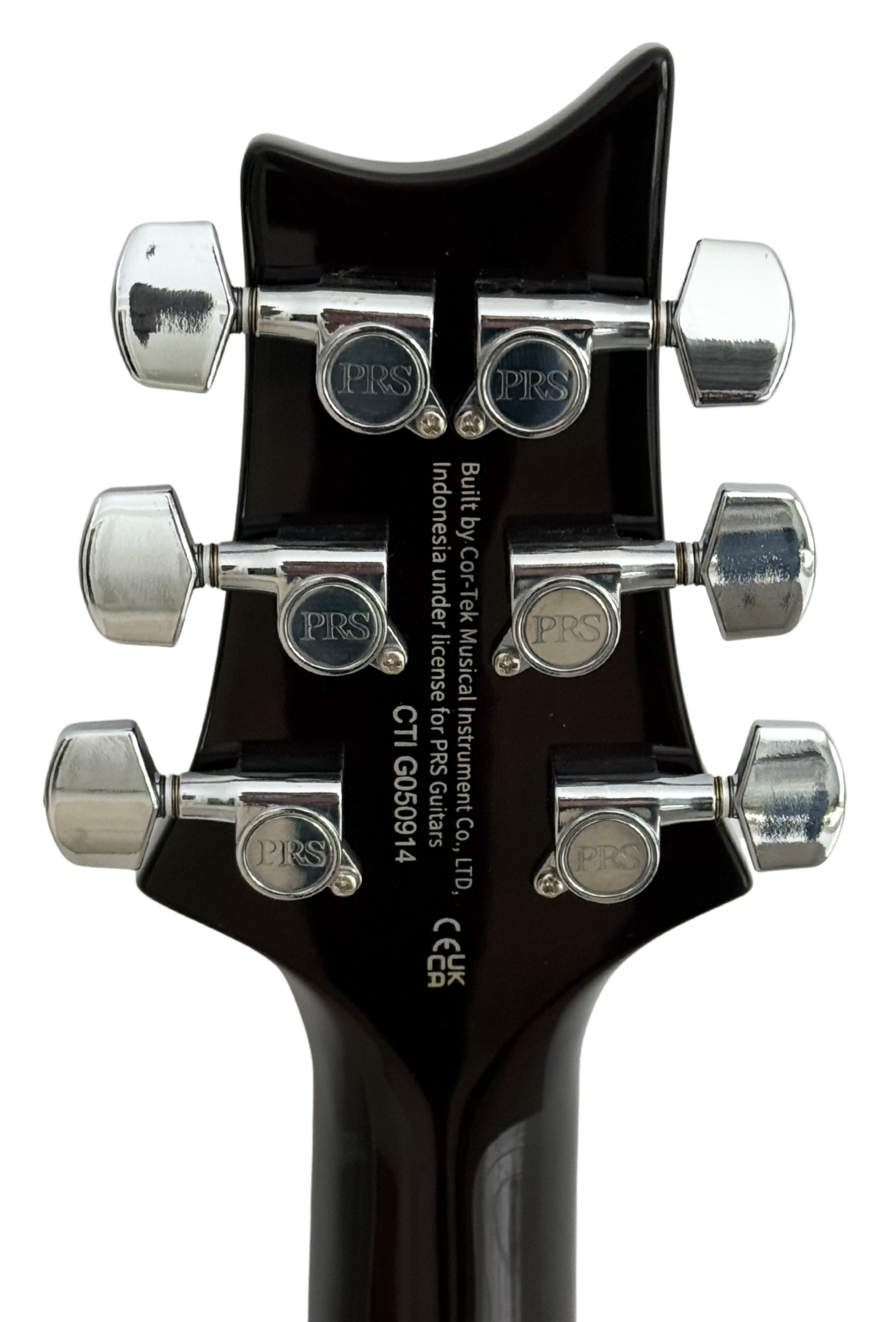
PRS guitars are known for their high end, made in U.S.A. instruments built out of exotic woods with highly figured maple tops and necks that feature their signature birds-in-flight fretboard inlays. Over time PRS saw that demand was growing for more affordable versions of their Core models. So in 2001 they launched their SE line of guitars. SE stands for Student Edition. These were originally made in Korea by Cort. Production was eventually moved to Cort’s Indonesia and China factories in 2018.
Cort (now Cor-Tek) started by making pianos in Seoul South Korea in the 60’s. In 1973 they expanded into guitars. They are now one of the largest guitar manufactures in the world. While they make Cort branded guitars, the majority of their business comes from making Original Equipment Manufacturer guitars for other companies. They are known for utilizing a “SMART” manufacturing process in their factories, combining automated technology with skilled, low cost labor to produce a high volume of guitars for brands like Ibanez, G&L, PRS, Squier, Schecter and others.
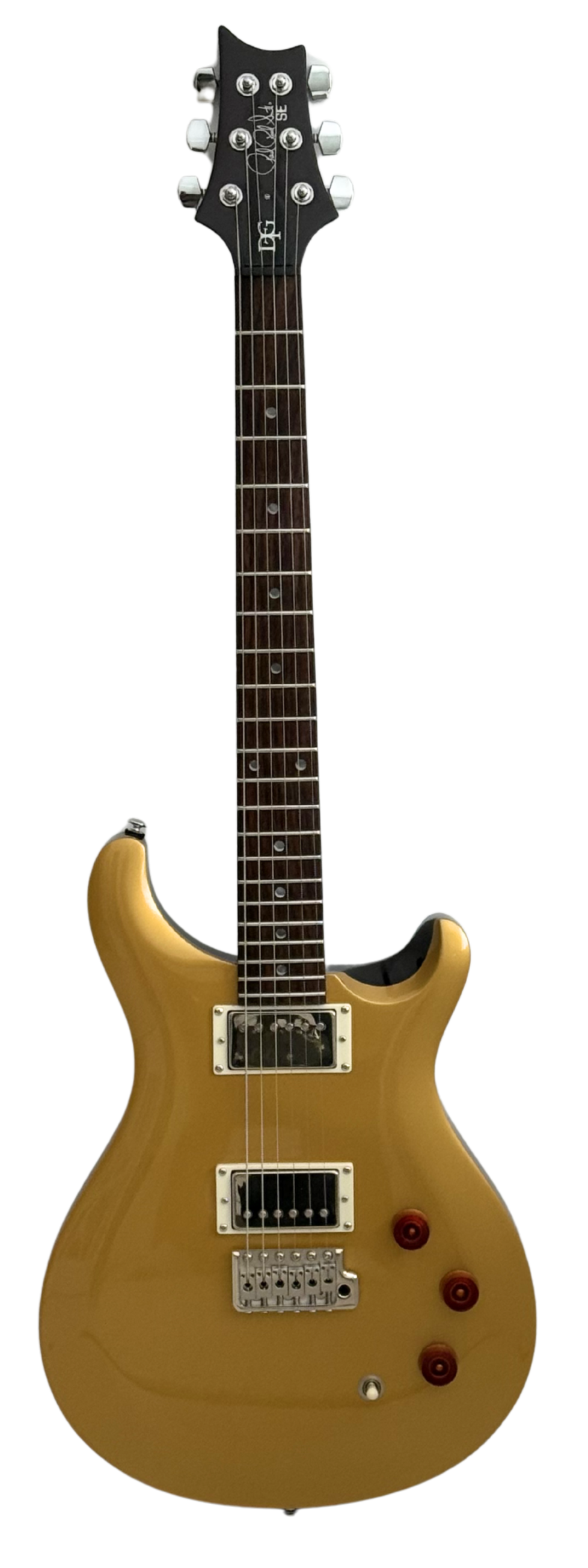
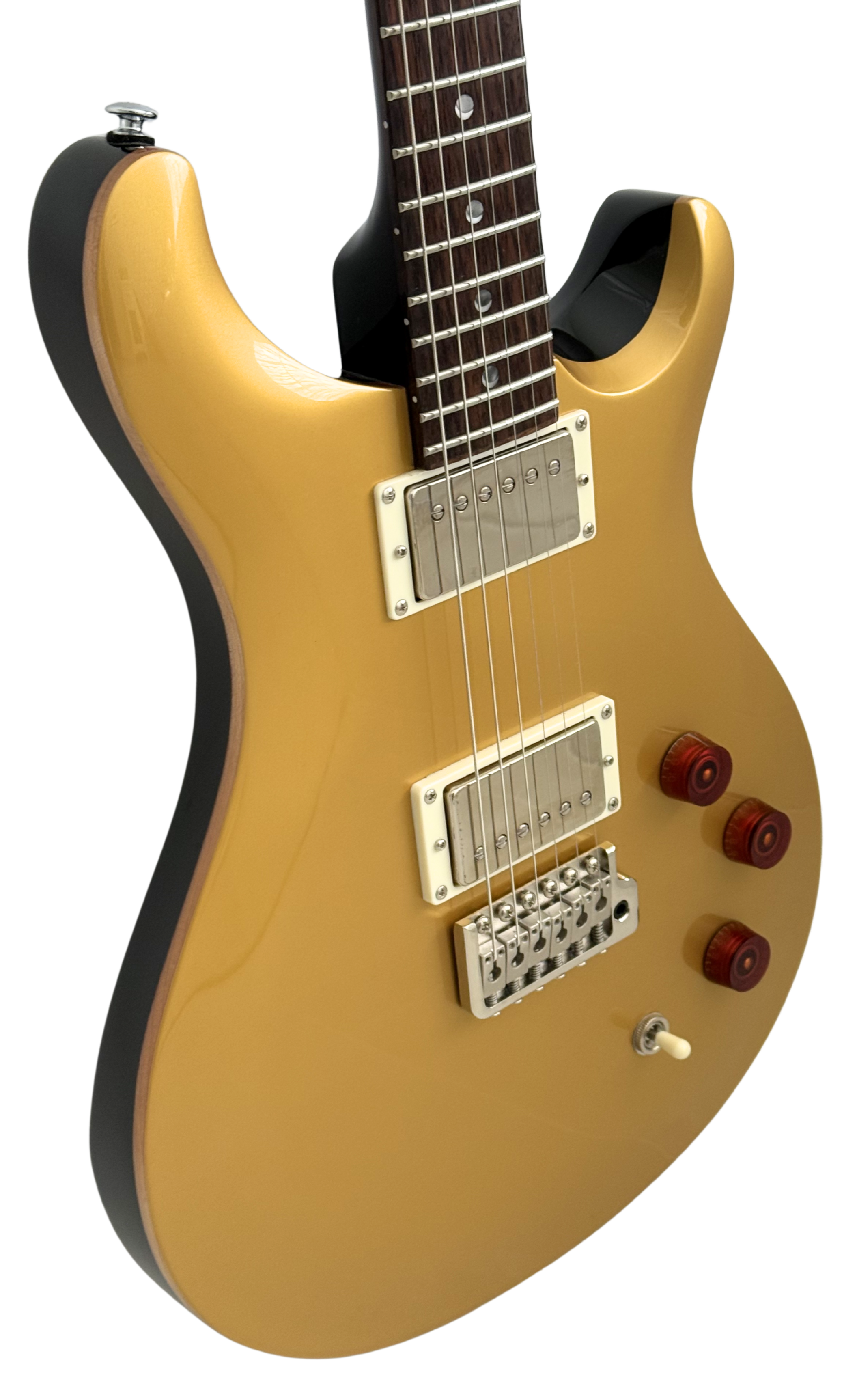
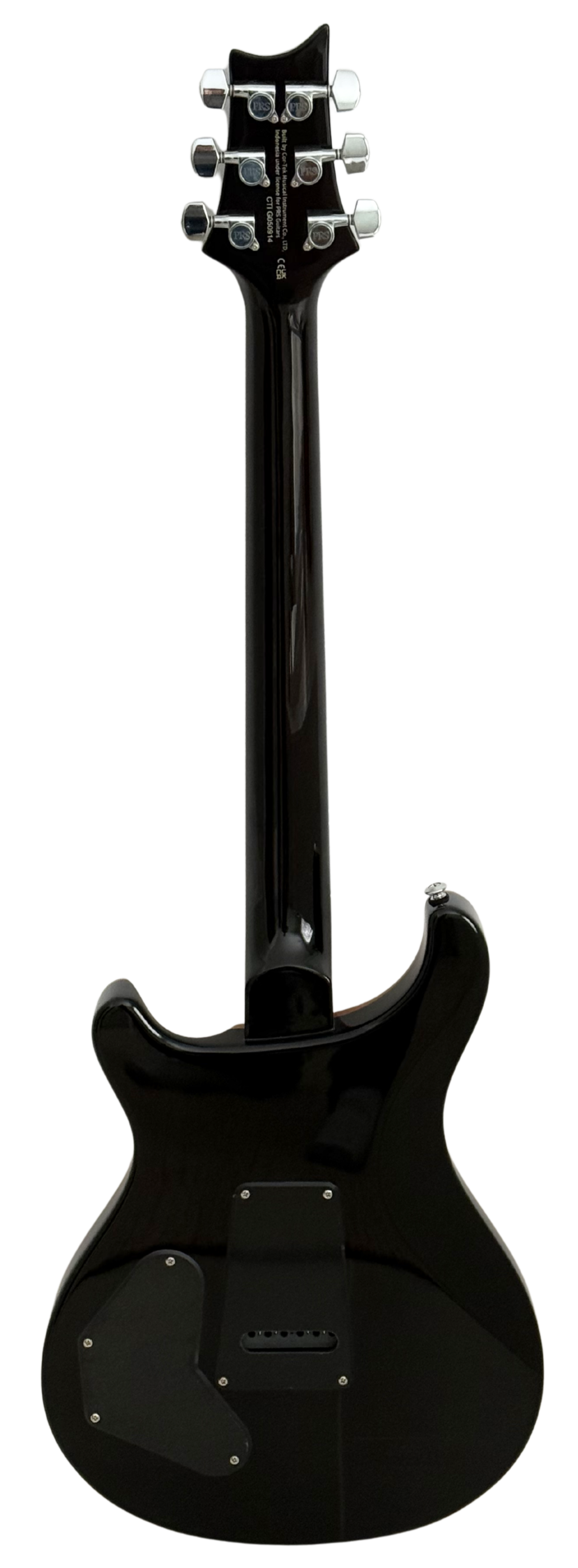
The guitar featured here is a PRS SE DGT model. The DGT stands for “David Grissom Tremolo”. It is the SE version so it’s the more affordable, import guitar. The first DGT signature model was developed by PRS in collaboration with Grissom and released as a made in U.S.A. Core model. You can still buy those today. Due to the popularity of the original DGT design, PRS decided to make these less expensive SE versions as well. The guitar design is based off of PRS’s McCarty model which pays homage to Gibson’s legendary president from their golden era, Ted McCarty.
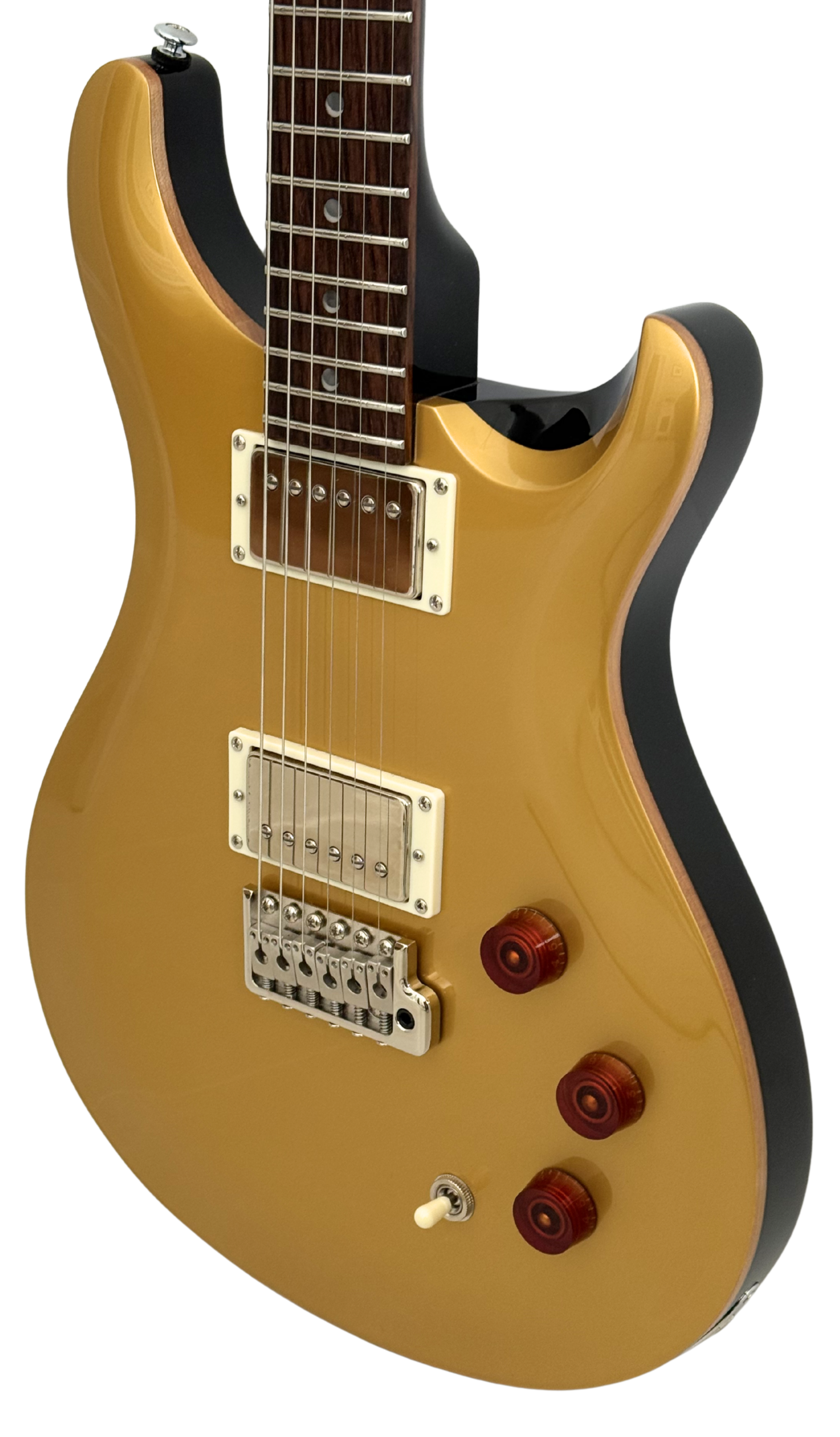
True to PRS’s blended approach, this is a 25” scale length which puts it in the middle between Fender’s typical 25.5” scale and Gibson’s shorter 24.75” scale. It has a double cutaway body like s Stratocaster, with the depth and body carve that’s similar to a Les Paul. The guitar sports 2 humbuckers, 2 volume, 1 tone control with push/pull pot, a 3-way pickup selector. It has a cool shaped headstock with 3 on-a-side tuners similar to what you see on a Gibson. The guitar has a string through body with tremolo, similar to a Stratocaster. The body is made of mahogany and has a maple top. The neck is made of mahogany with a rosewood fretboard and moon, pearloid dot inlays. You can also get these with the famous “birds-in-flight inlays”. The maple top on this guitar has a gloss Gold colored finish. The body and neck are black gloss. The SE models also come in vintage cherry and tobacco sunburst finishes.
The DGT has a set neck with rounded profile and 10” radius fretboard that feels more like a late 50’s Les Paul than the typical wide, flat neck type that PRS is known for. The humbuckers sound clear and well balanced. The coil splitting feature powered by a push/pull tone pot gives you a wide range of tones with a more single coil sound if you want it.
Admittedly, I’m pretty new to get on board with the “PRS thing”. I’ve known about them for years and mostly had dismissed them. I wasn’t sure about the look. I didn’t see myself playing one of their more ornate guitars with the bright colored, flamed maple tops and abalone bird inlays on the neck. My perspective changed once I played this guitar. It does look more understated than some of PRS’s other finishes. I like the 50’s Gibson Gold color, but the build quality, playability and sound is really what got me. So much so that I think this is possibly the best value in electric guitars today.
I repair guitars for a living and see imports in this price range come into the shop every week with twisted necks, poorly cut nuts, rough fret ends, cheap electronics and switches that break down after a year of playing. That rarely happens with the PRS SE guitars. Whether they’re new or have been around and played for a few years they are usually solid instruments. The nuts slots are cut well in production. Frets are level with smooth ends. Necks are straight. Hardware, tuners and electronics are very good. The core DGT model that’s made in the U.S.A. is definitely a nicer guitar than the SE. It’s designed to be and is considerably more expensive, but as far as value goes, this SE version is a great deal and is definitely more than just a student model. You can absolutely gig with it.
PRS must put more time into overseeing production and monitoring the quality of output from their overseas partner compared to some of the other brands and it really shows.
You can find these guitars on the used market in excellent condition for a very reasonable price. I really like the SE range. This DGT model is my personal favorite.