

When Gibson acquired Epiphone in 1957 they were mostly interested in Epiphone’s successful upright bass business. The guitar line that came along with the purchase was more of an afterthought. Ironically the upright basses didn’t sell well and production ended up being short lived. Epiphone guitars on the other hand ended up being hugely successful for Gibson and continue to be so today. Epiphone is basically Gibson’s line of affordable guitars built on classic designs. Nowadays most of the Epiphone guitars are made outside of the U.S., but back in the 1950’s and 60’s they were made in America along side their Gibson counterparts.
In 1958 Gibson released the ES-335 model. It was their first semi-hollow body electric guitar design. ES stands for “Electric Spanish”. That same year Gibson was reworking the Epiphone guitar line and introduced the Sheraton. Similar to the ES-335, the Sheraton was a semi-hollow body guitar. These new semi-hollow guitars featured a block of solid wood that ran through the center of the guitar. The ends or “wings” of the guitar body are hollow with F-holes in the top.
Solid body electric guitars like the Telecaster, Stratocaster and Les Paul were introduced in the early 50’s but they weren’t immediately popular. Many players still preferred to play hollow body, jazz style electric guitars. By the late 50’s preferences and music styles were changing. Guitar amplifiers were also getting bigger and louder. The traditional full hollow body guitars with single coil pickups were becoming less than ideal because they were prone to feedback with the louder amps. The new Gibson ES-335’s and Epiphone Sheratons solved for this by adding the center block to improve sustain and reduce feedback. The center block plus newly designed hum canceling pickups allowed players to play bigger venues at louder volumes while maintaining a warm, clean tone. Remember distortion wasn’t considered a good thing yet.
The semi-hollow guitar designs were innovative and players loved the look, but some still preferred a full hollow body and the tone that single coil pickups produced. To appease these guitarists Gibson offered a full hollow body version of the ES style guitar. The Gibson ES-330. It retained the thin body profile of the 335, but without a center block. It also had single coil P-90 pickups instead of humbuckers. The ES-330 was released in 1959. Three years later in 1961 Epiphone put out their version of the full hollow body ES style guitar with single coil pickups called the Casino.
The Casino’s first era lasted from its introduction in 1961 until 1970. The model saw several changes to the specs over that period, especially in the first few years. Gibson stopped production on them in 1970. New executive management was focused on “optimizing” the business and Casino’s weren’t selling well. They came back into Epiphone’s lineup in the 80’s. The versions from that time were made in Japan and are high quality guitars. Production eventually shifted to Korea in the 90’s and ultimately to China.
Casino’s are still made today as reissues and are one of Epiphone’s most popular guitar models. John Lennon, Paul McCartney and George Harrison played Casino’s throughout the late 60’s. John was caught once on film complaining about how bad his Casino was playing that day, but from all accounts he did really like the guitar and used it regularly until his death.
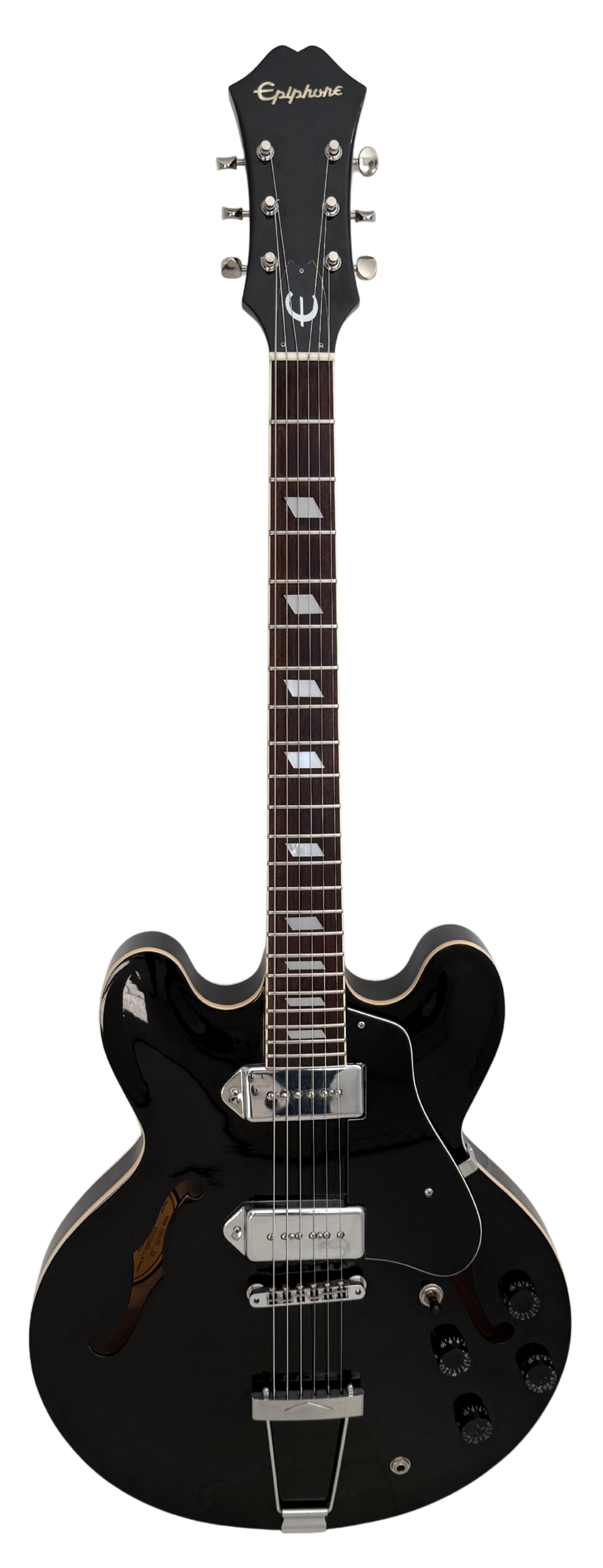
This guitar featured here is an Epiphone Casino standard. Made in Korea at the Peerless factory in 1995. Epiphone made a higher end version of the guitar around the same time as part of the Elitist line. Elitist versions were made in Japan and cost 2x the price of a Made in Korea standard.
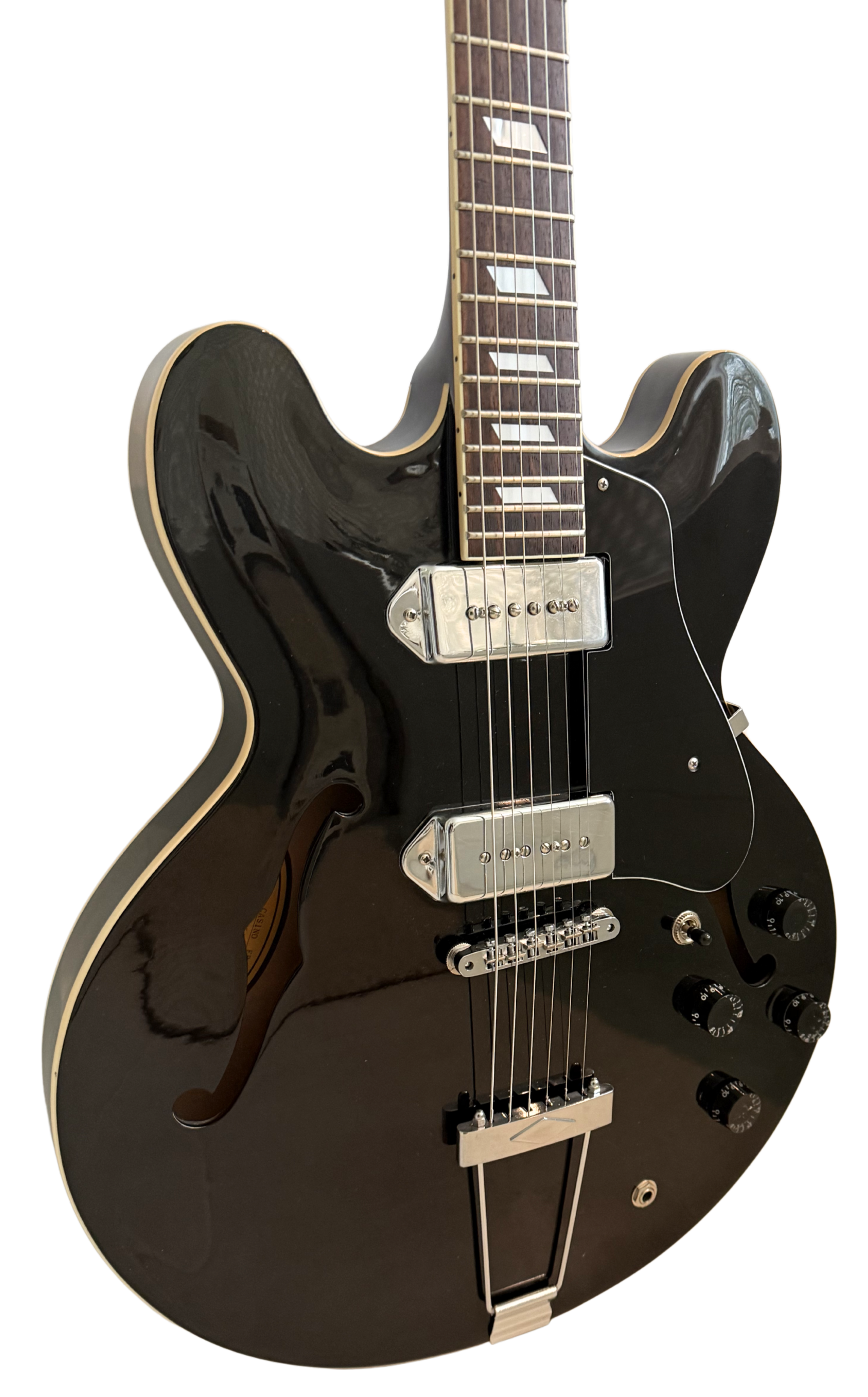
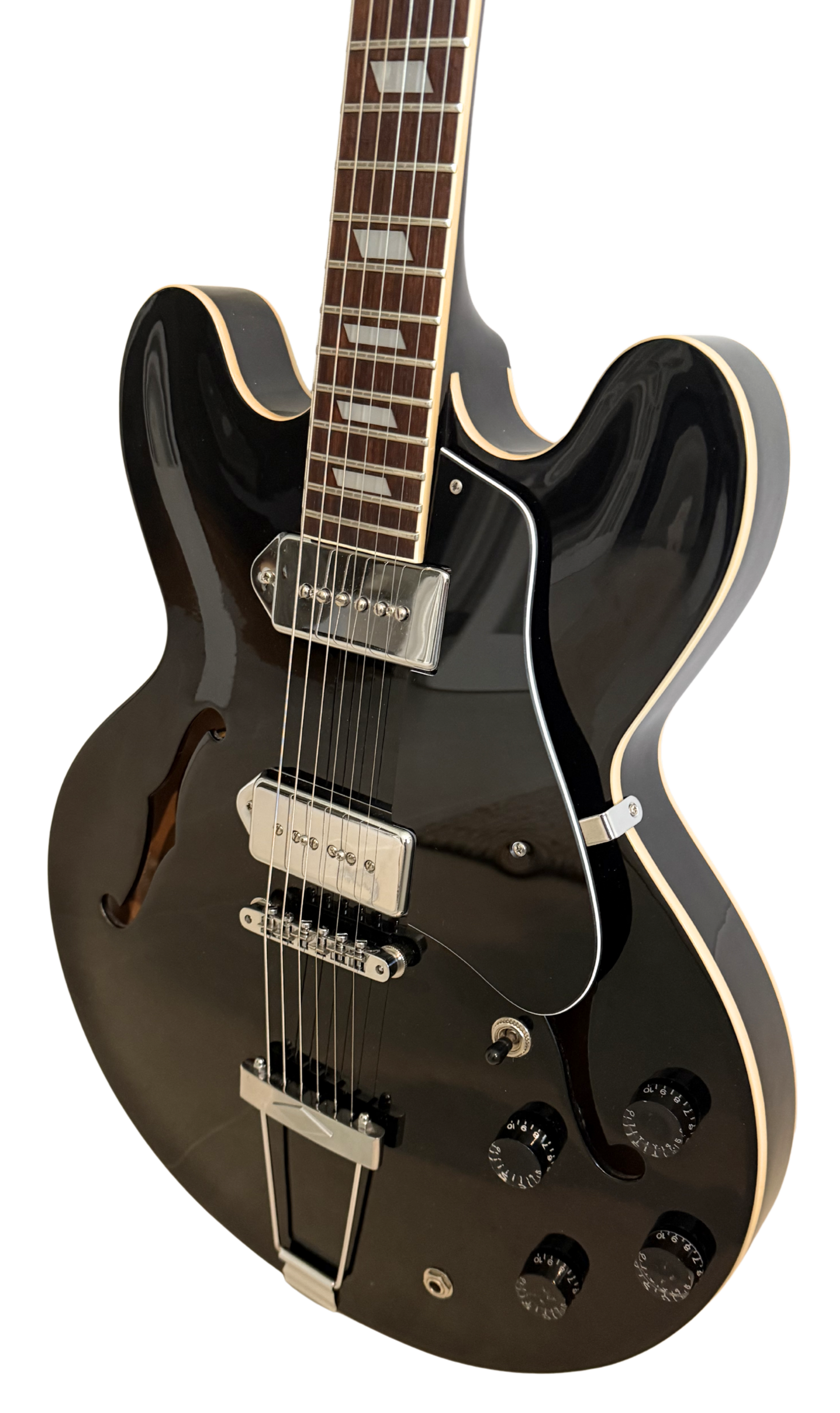
This Casino has a fully hollow, laminated maple top, back and sides with a 24.75” scale length and a mahogany neck. The finger board is made of dark rosewood and has parallelogram inlays. Sporting a traditional Epiphone headstock with 3 on a side chrome vintage style tuners. The neck has a rounded, 60’s slim profile with 12” radius and a 1.68” wide nut. The guitar came with a tune-o-matic bridge, trapeze tailpiece, two “dog ear” chrome covered P-90 pickups, a 3-way pickup selector, two volume and two tone controls.
Many people feel that the Epiphones made in Korea out of the Peerless and Unsung factories during the late 90’s and early 2000’s are better quality guitars compared to the modern versions. After playing several Epiphones over the years including new models, I tend to agree.
I don’t think that the production process was any better in Korea compared to how they are doing it modern day, but I do think the materials quality was better. Wood and metal alloy quality in general is not the same as it was even 30 years ago. Made in Korea Epiphones have a reputation for having poor electronics. I do think that the pickups offered in modern Epiphones are better now compared to the late 90’s. A lot of people upgrade the pickups in the 90’s Epiphones. I don’t think that’s necessary, but I do think these guitars will benefit from installing higher grade 500k volume/tone pots and a higher quality 0.022μF capacitor. After making those changes, the stock pickups sound excellent. Casinos from this era also came in cool colors like this all black one or cherry red. Now they are only offered in sunburst or natural. The older ones also came with a nice hardshell case from the factory. Modern Casino’s have a soft gig bag.
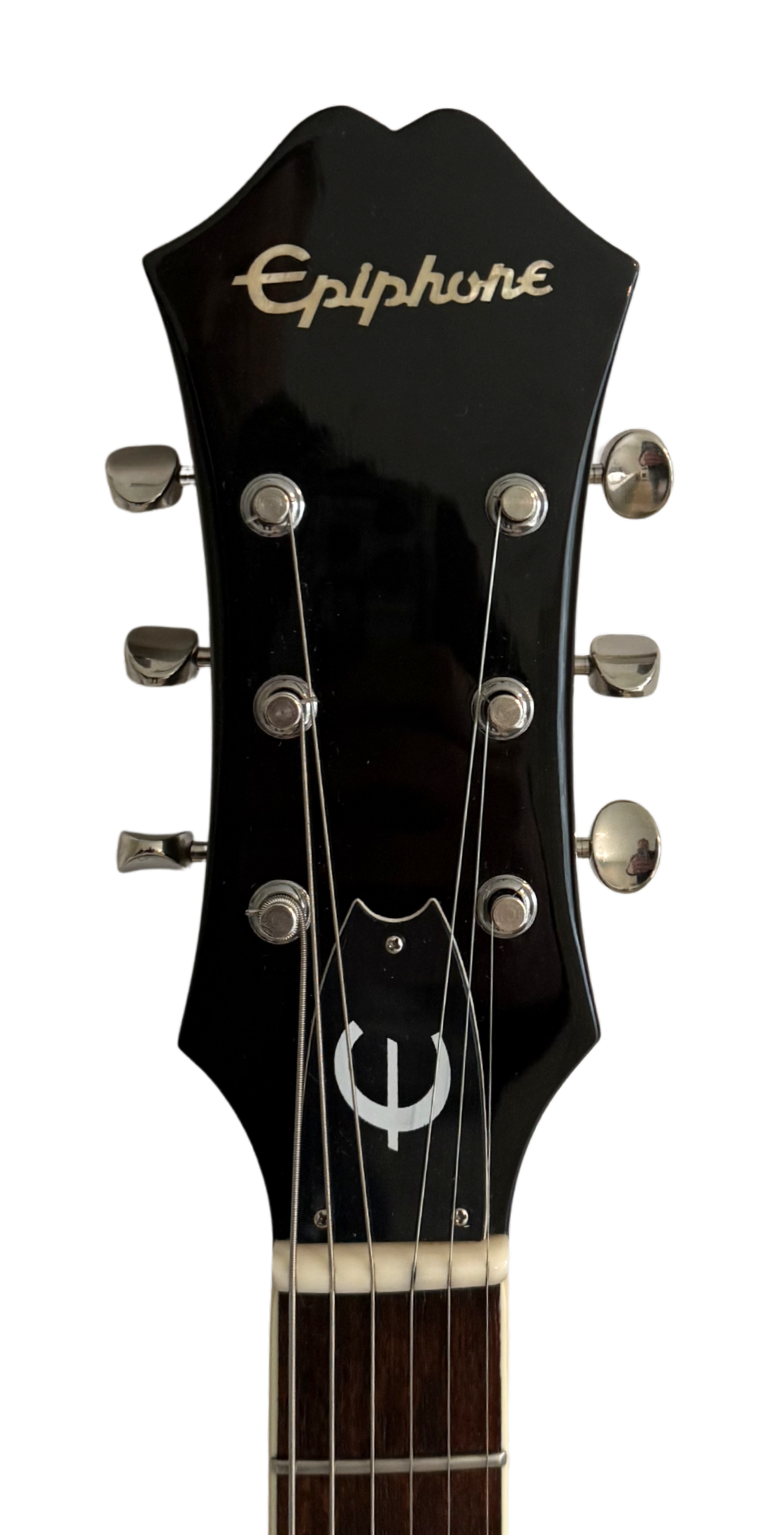
After 30 years of being played this one is nicely broken in, but well maintained. They are great buys on the used market. Often times they come with upgrades from the previous owner. This one had a nice bone nut installed, a new pickguard, new Gibson style speed knobs and the upgraded pots and capacitor.
The fit and finish is very good. The full hollow body is light weight and acoustically resonant. It even sounds nice unplugged. The P-90’s produce excellent tones. Clear, punchy with a tight bottom end and sweet high end chime. I don’t mind the small amount of feedback that I get at higher volumes.. It adds a rawness and some harmonics to the guitar’s tone especially with an overdrive or a fuzz pedal. The guitar nails everything from classic Beatles tones to blues and R&B plugged into a clean tube amp. It does an awesome job with indie rock too. It’s great for getting into Interpol or the Strokes sonic territory. Sweet!