

Big name American guitar makers had their share of challenges in the late 60’s and throughout the 70’s. Demand for electric guitars had gone through the roof after the Beatles invaded the U.S. in 1964. Guitar was at the center of popular music. People from all walks of life wanted to buy a guitar and learn to play. It was hard for the manufacturers to meet the demand at the time. In 1965 Leo Fender sold Fender musical instruments to CBS. Chicago Musical Instruments (CMI) who owned Gibson was acquired by Ecuadorian Company Limited and renamed Norlin in 1969. Towards the beginning of the 70’s both Gibson and Fender were running into quality issues as they implemented changes to scale their business profitably in order to meet the demand.
In 1965, Japanese manufacturer Ibanez began importing electric guitars into the U.S. primarily through a distributor called Elger Guitars. They had a few quirky “Teisco like” solid body electric guitar designs in their early line up, but they really gained prominence by offering quality, affordable copies of popular American models like the Fender Stratocaster, Telecaster and Gibson Les Paul and SG guitars. The Ibanez copies were very good guitars and were half the price of the Gibson and Fender models they were copying.
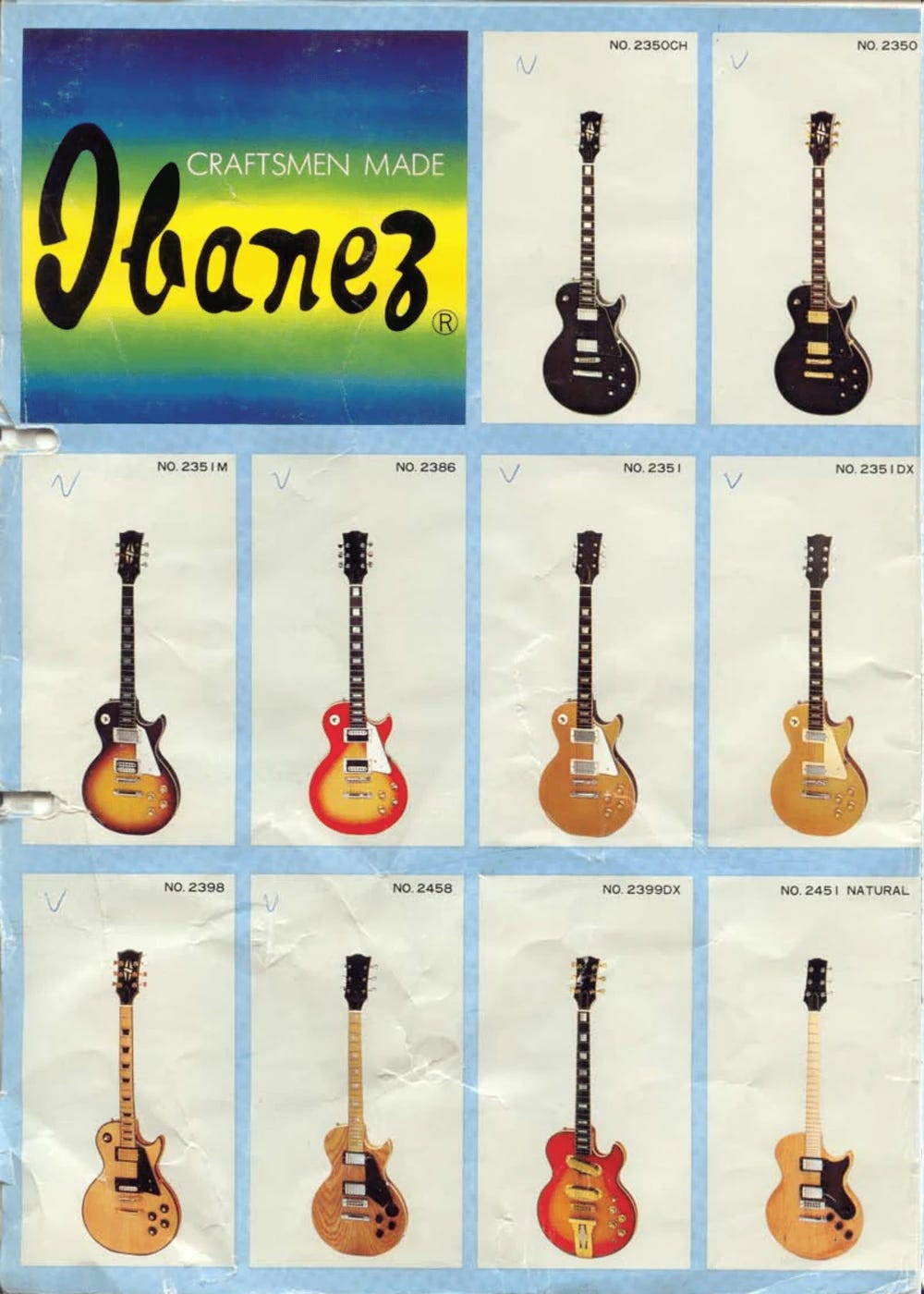
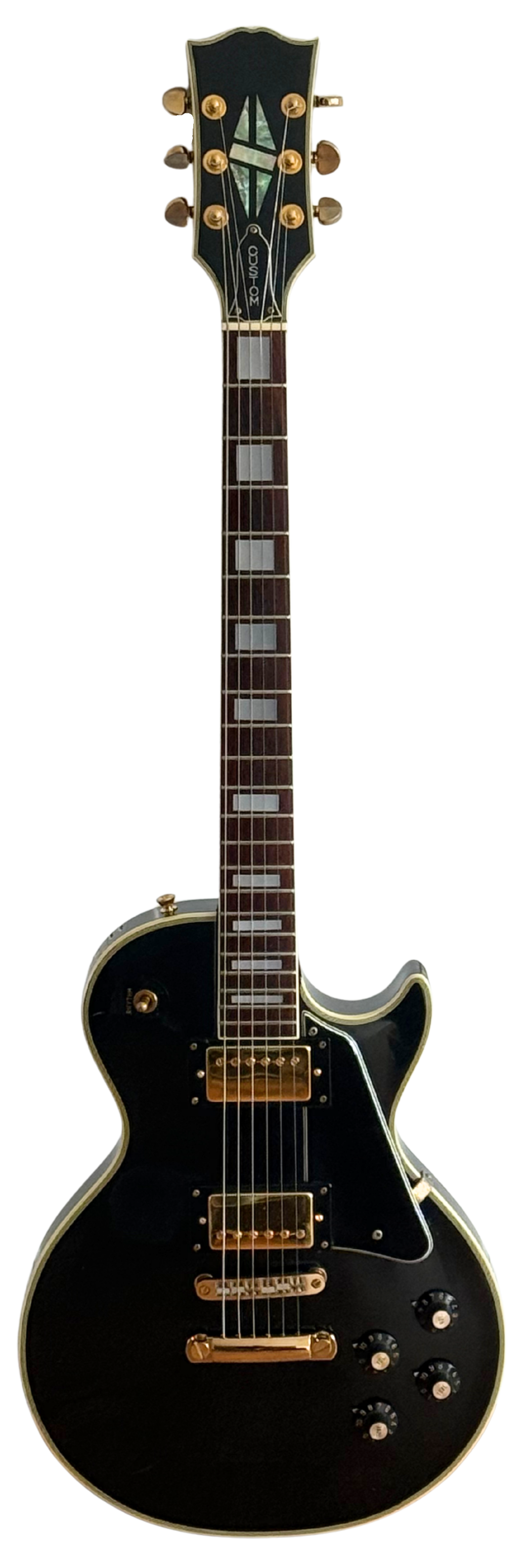
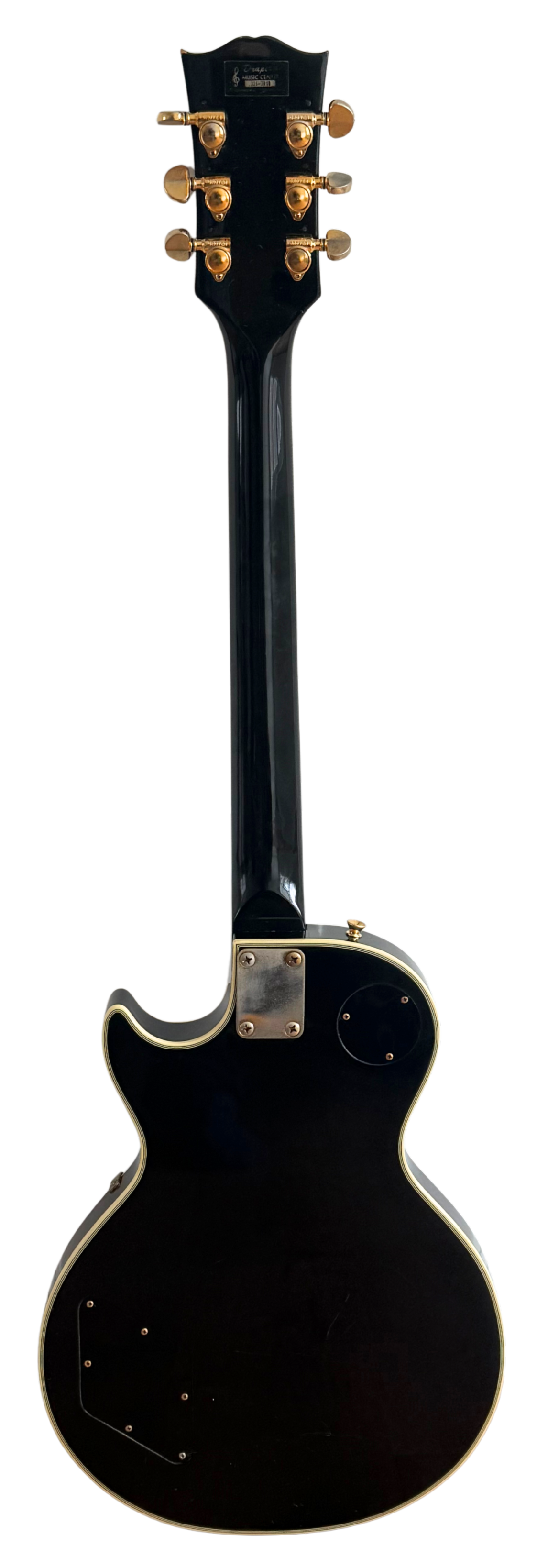
The guitar featured here is a 1975 Ibanez model 2350. It’s an exact copy of a late 60’s Gibson Les Paul Custom “black beauty”. Ibanez imported these into the U.S. from 1971 to 1977. Their early copies were so good and so accurate to the original design, Norlin sued Elger guitars for patent infringement over the Gibson headstock look in 1977. The lawsuit lead to an out-of-court settlement that prompted Ibanez to abandon copying and develop original designs like the Artist series.
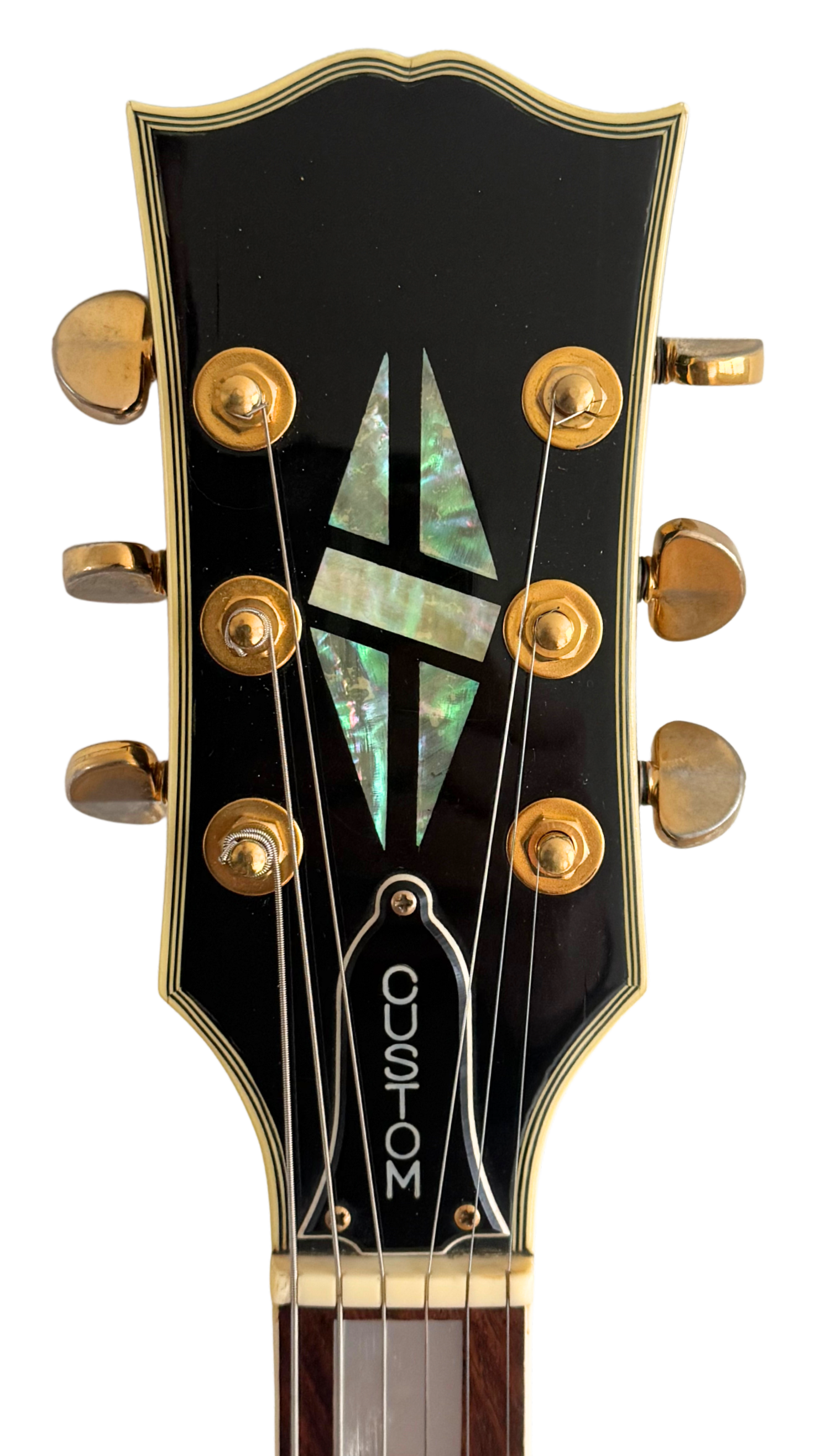
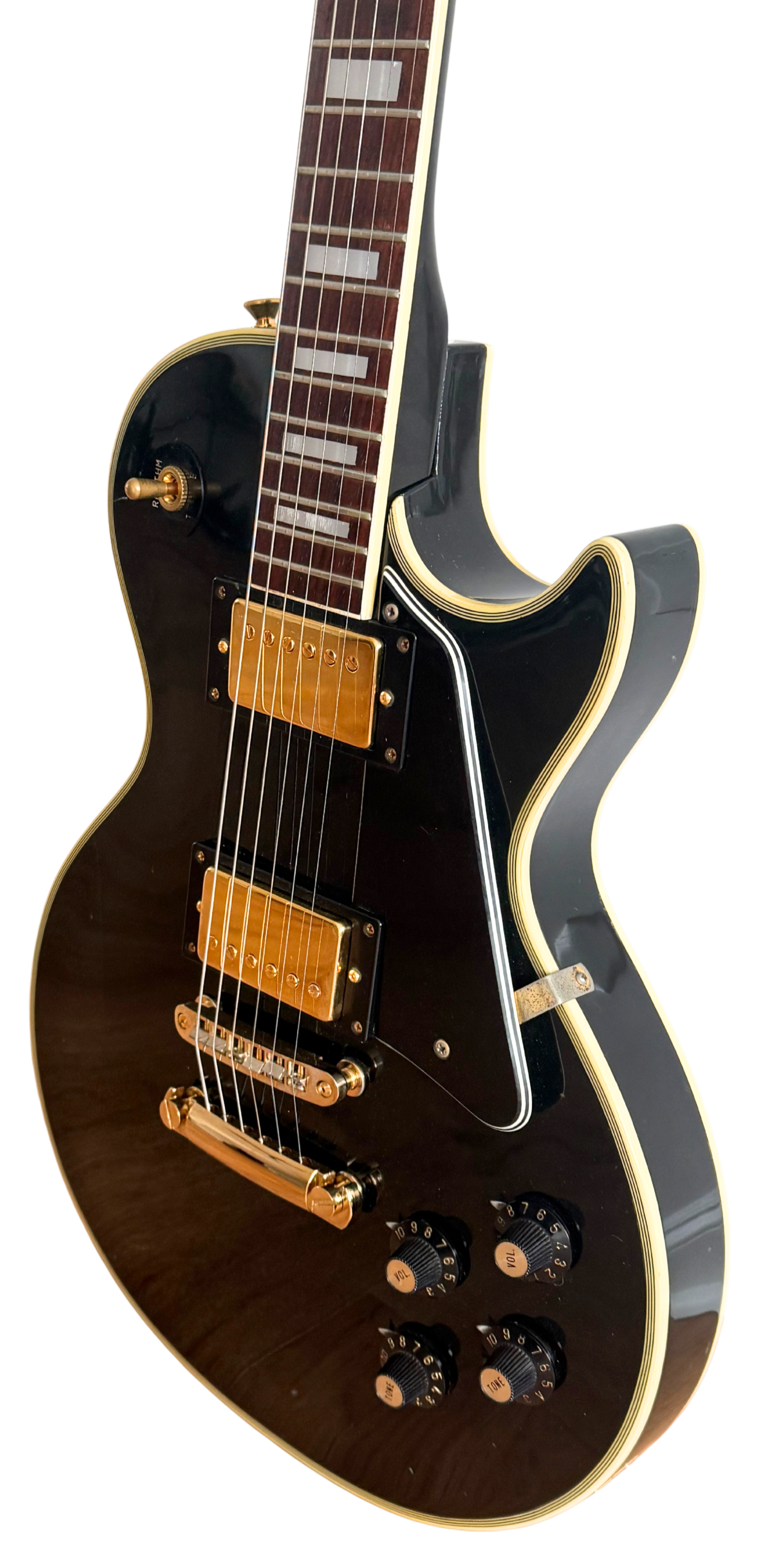
The 2350 has a 24 3/4” scale length, 22 frets, solid mahogany body, one piece maple neck with rosewood fretboard and block inlays. Two Super 70’s humbuckers, a 3-way toggle switch, 2 volume and 2 tone controls. The guitar has a slim C, bolt on neck vs. glue in. There is no logo on the guitar which adds to the mystique and makes it just a little bit better of a copy. The original tuners on this guitar were replaced with Grovers in the 70’s.
For me this Ibanez is a special guitar. It was my first electric, and was given to me by my uncle who purchased it used from Draper’s Music in Palo Alto California in the late 70’s. Draper’s was a famous music store in the SF Bay Area. They eventually closed down in the early 2000’s. It’s where Jerry Garcia bought his first Les Paul Custom.
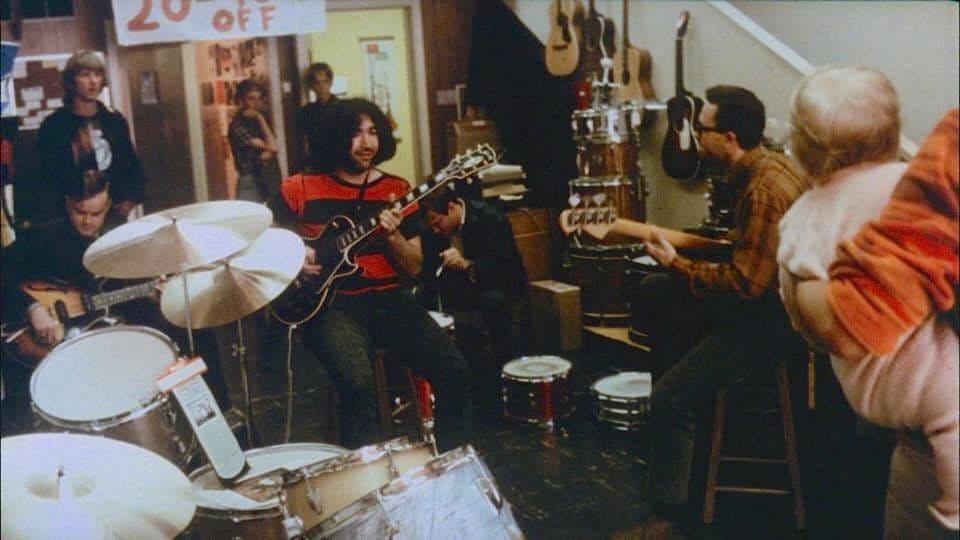
My uncle was a California hippie who later became a Silicon Valley Exec. He saw Hendrix perform live and would often frequent “Days on the Green” at the Oakland Coliseum when he was younger. He used to plug this Ibanez into the Mic input on his Pioneer SX-850 receiver and play through his stereo. The combo actually produced a really nice clean tone. I visited California for the first time when I was 14. My uncle gave me this guitar on that trip along with 2 week crash course on classic rock guitar music. When I was a teenager in the 90’s this guitar saw a lot of play time through my Peavey Bandit 112.
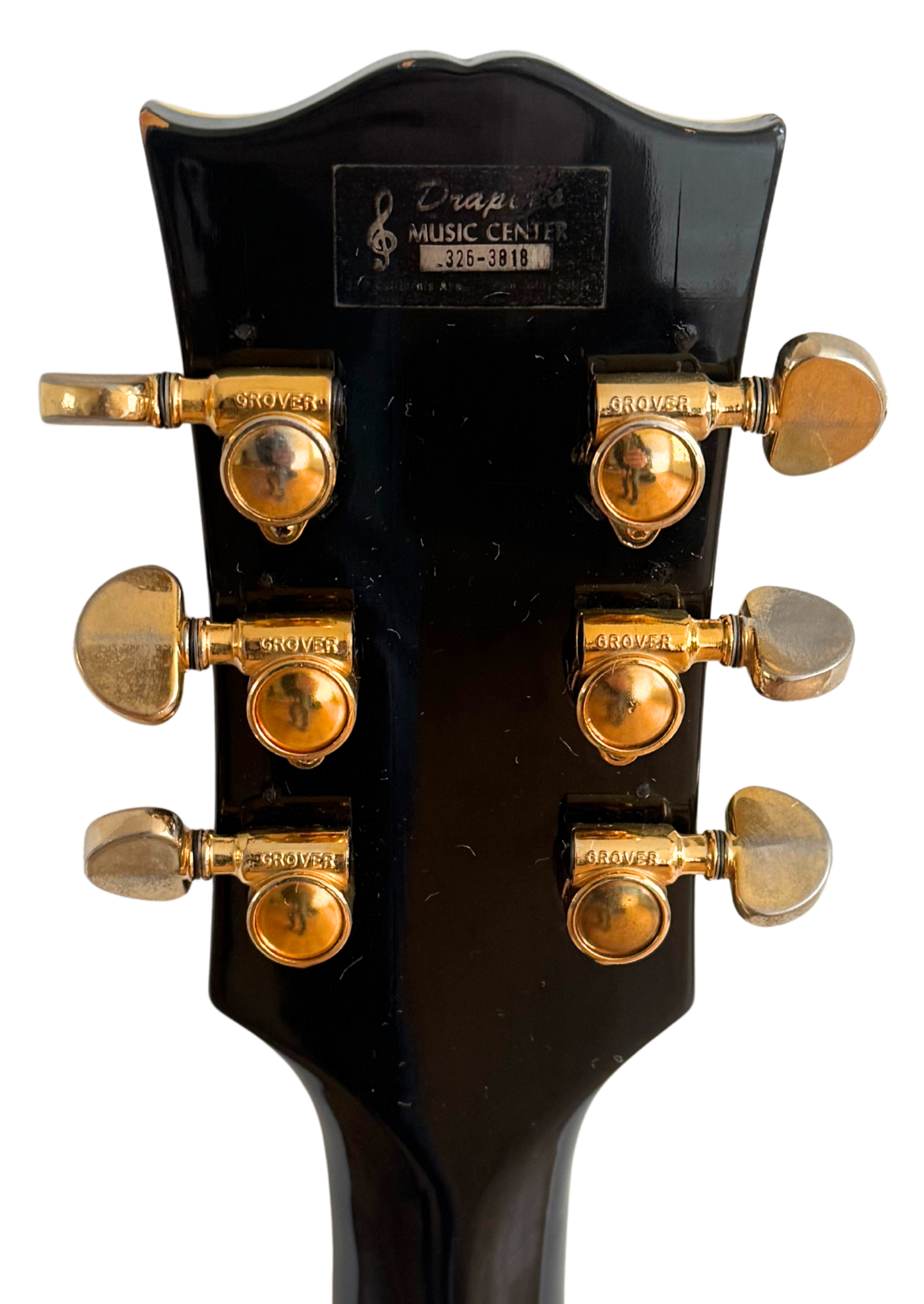
The humbuckers deliver that classic rock tone so well. The neck is slim and fast. The original 1950’s Gibson Les Paul Customs are known as the “Fretless Wonders” because of the small and low vintage fret wire used on the guitars . This Ibanez copy also has very small/low frets. Partially due to some wear, but they really came that way. It sets up great with low action and light gauge strings (9’s). The guitar weighs considerably less than an original Les Paul Custom from that era.
You can still find different Japanese made Les Paul copies fairly easily on the used market. Guitars made by companies like Ibanez, Univox, Greco and Electra. Pre-lawsuit (1977) versions like this are getting harder to find. Unlike the made in China copies (Chibsons) that we see flooding the market today, these early Japanese copies were pretty special guitars in their own right. Here’s a great clip of Magic Sam playing Earl Hooker’s Univox Les Paul copy.
I’m pretty lucky to still have my first electric. I meet people every day that tell me stories about the ones that got away. Guitars they sold and wished they still owned. I’ve been taking care of this guitar and playing it for over 35 years. Someday I’ll find a good home for it with someone else who will play it and care for it. Be forewarned, this baby comes with a lot of mojo and cool stories.
WOW
GOOD VIBES. LOVE YA BRO.